What is unified communications?
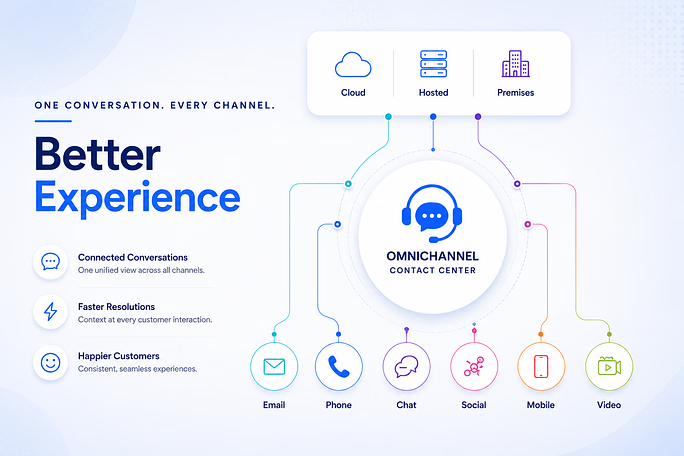
Unified communications (UC) is a business communication system that brings together voice calls, video meetings, instant messaging, email, SMS, file sharing, and collaboration tools into a single platform. Instead of switching between multiple apps, employees can communicate, collaborate, and access conversations from one interface across desktop and mobile devices. By integrating these communication channels with business applications like CRM and productivity tools, unified communications improves teamwork, speeds up decision-making, enhances customer interactions, and supports remote and hybrid work environments.
Unified communications: Why modern enterprises need one platform
Communication problems do not usually become business problems overnight. It becomes a problem when growth outpaces the systems supporting it.
Why disconnected communication slows enterprise growth
Most enterprises already have communication systems in place.
What unified communications actually means
Many businesses hear the term unified communications and assume it simply means combining calling and messaging into a single tool.
- Voice and calling
- Video conferencing
- Instant messaging
- Team collaboration
- Email integration
- File sharing
- Mobile communication
- Presence visibility
- Cross-device communication
Why modern enterprises are shifting to one platform
Enterprise communication is no longer limited to office calls and emails.
Faster collaboration
Better workflow efficiency
Communication stays connected to work instead of slowing it down.
Higher visibility
Leaders can track communication flow and team coordination more effectively.
Stronger business continuity
Teams remain aligned even across locations, departments, and time zones.
Easier scalability
A single connected platform scales far more efficiently than fragmented systems.
Unified communications vs disconnected systems
The difference becomes more visible as enterprises grow.
- Communication silos
- Repeated information
- Slower collaboration
- Reduced visibility
- Higher IT overhead
- Workflow delays
- Poor coordination across teams
- One connected communication environment
- Centralized collaboration
- Faster information flow
- Better team visibility
- Improved productivity
- Easier administration
- Stronger scalability
- Better support for hybrid teams
Why communication silos hurt productivity
Communication issues rarely look dramatic at first.
- Workflow efficiency
- Decision-making
- Internal collaboration
- Operational agility
- Team alignment
- Business responsiveness
How unified communications supports hybrid and distributed teams
Modern enterprises are no longer tied to one office.
Hybrid teams, remote workforces, and distributed operations are now part of everyday business.
- Connect hybrid teams faster
- Improve collaboration across locations
- Reduce dependency on isolated systems
- Simplify internal workflows
- Support distributed workforce operations
- Maintain business continuity
- Improve flexibility as teams scale
What enterprises should evaluate before choosing a platform
This is where many businesses make the wrong decision. They compare features, vendor size, or pricing before understanding operational fit. A stronger evaluation starts with business needs.
Ask whether the platform can unify communication across departments. Check whether collaboration stays connected. Review whether it supports hybrid teams and distributed workforce models. Look at scalability, integrations, security, reporting visibility, and administrative simplicity.
The goal is to simplify enterprise communication.
Why enterprise leaders are prioritizing connected communication
- Productivity
- Collaboration
- Workforce agility
- Customer experience
- Business continuity
- Business agility
- Long-term scalability
What usually breaks before enterprises move to one platform
Businesses rarely modernize communication because they want more features.
The warning signs are often specific.
Teams keep switching between systems. Collaboration feels slower. Visibility becomes weaker. Workflows feel disconnected. IT overhead grows. Reporting becomes fragmented. Hybrid teams struggle to stay aligned.
Where Telerain fits into this shift
When communication spans disconnected systems, businesses lose speed, visibility, and efficiency. That is exactly where Telerain creates value.
- Connected collaboration
- Faster communication flow
- Reduced silos
- Better visibility
- Higher workflow efficiency
- Easier scalability
- Stronger business continuity
- Better support for hybrid and distributed teams
FAQs
Unified communications is a centralized platform that combines voice, messaging, collaboration, video, and business communication tools into a single, connected environment.
Why do enterprises need unified communications?
It helps reduce silos, improve productivity, simplify communication, and support scalability.
Is unified communications useful for hybrid teams?
Yes. It helps hybrid teams stay connected, collaborate faster, and reduce fragmented workflows.
How is unified communications different from separate communication tools?
Separate tools work independently. Unified communications connects them into one platform.
Does unified communications improve productivity?
Yes. Centralized communication improves workflow efficiency, visibility, and team collaboration.
Why one connected platform is becoming the smarter enterprise move
Communication should not become harder as businesses grow. But that is exactly what happens when systems expand faster than the communication strategy. More tools create more silos. More platforms create more friction. And teams spend more time managing systems instead of moving work forward.
That is why unified communications is no longer just an IT upgrade. It is becoming a business growth decision. When communication flows through a single connected platform, collaboration becomes easier, visibility is stronger, workflows move faster, and enterprises scale with less operational complexity.