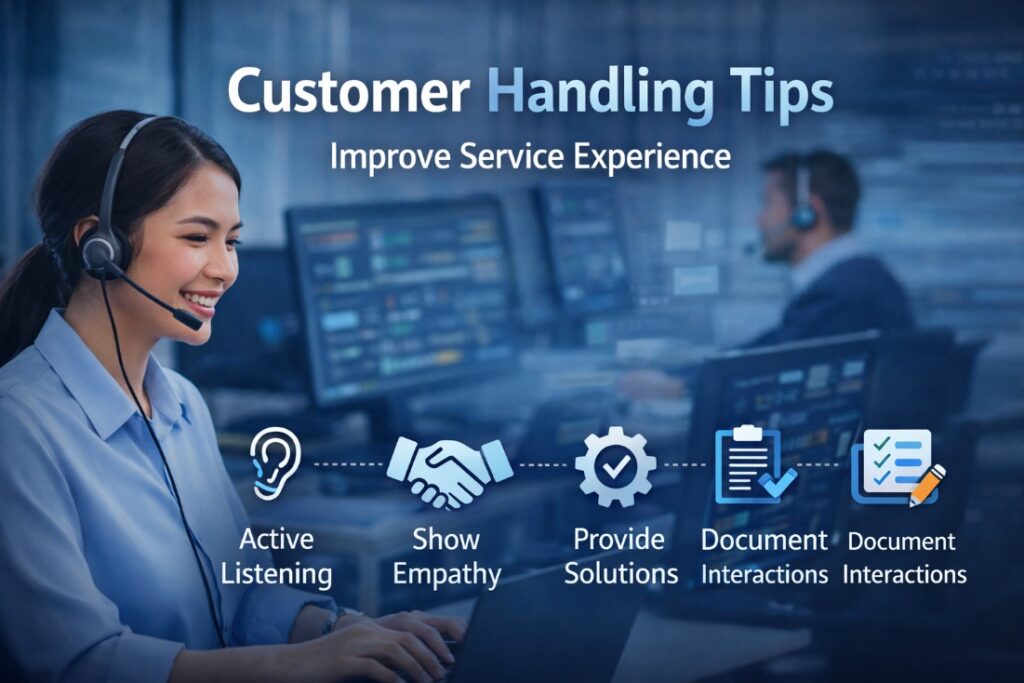
Customer handling is at the core of delivering exceptional service.
In today’s experience-driven market, how businesses interact with customers directly impacts satisfaction, loyalty, and long-term growth. Customers expect fast, clear, and personalized support—and every interaction is an opportunity to build trust.
Strong customer handling is not just about resolving issues—it’s about creating positive, meaningful experiences that customers remember.
Why Customer Handling Matters
Modern customers have higher expectations than ever before. They want quick resolutions, clear communication, and a human touch.
Effective customer handling helps businesses:
- Improve customer satisfaction
- Build long-term relationships
- Increase retention and loyalty
- Strengthen brand reputation
Organizations that focus on customer-centric communication consistently outperform competitors.
14 Customer Handling Techniques to Implement Today
Successful customer handling is built on communication, empathy, and efficiency. Here are proven techniques to enhance every interaction.
1. Practice Active Listening
Allow customers to fully explain their concerns without interruption. Focus on understanding before responding.
2. Confirm Understanding
Repeat key points to ensure clarity and show that you are actively engaged in solving the issue.
3. Maintain Professional Courtesy
Always be polite, respectful, and calm—even in challenging situations.
4. Personalize the Interaction
Address customers by their name and tailor the conversation to their specific situation.
5. Go Beyond Basic Support
Take extra steps to provide value, such as reviewing past interactions or identifying additional solutions.
6. Ask Open-Ended Questions
Encourage customers to share more details to better understand the root cause of the issue.
7. Provide Clear and Accurate Information
Ensure customers receive complete and correct information to make informed decisions.
8. Explain Processes Clearly
Help customers understand what actions are being taken and why, reducing confusion and frustration.
9. Use Simple and Clear Language
Avoid technical jargon and communicate in a way that is easy to understand.
10. Escalate When Needed
Recognize when an issue requires additional expertise and transfer it smoothly to the appropriate team.
11. Show Empathy While Staying Professional
Acknowledge customer emotions and respond with understanding while focusing on solutions.
12. Be Proactive
Look for opportunities to improve the customer’s experience beyond the immediate issue.
13. Offer Personalized Solutions
Recommend options based on the customer’s history, preferences, and current needs.
14. Document Interactions Effectively
Maintain accurate records of customer interactions to ensure consistency and better future support.
How to Build a Strong Customer Handling Strategy
To deliver consistent and high-quality service, businesses should adopt a structured approach:
Invest in Training
Equip teams with communication, problem-solving, and product knowledge skills.
Leverage Technology
Use CRM systems, automation tools, and analytics to streamline customer interactions.
Standardize Processes
Create clear workflows to ensure consistent handling across all channels.
Monitor and Improve Performance
Track key metrics and continuously refine strategies based on insights and feedback.
Final Thoughts
Customer handling is more than a skill—it’s a strategic advantage.
Businesses that prioritize clear communication, empathy, and efficiency can transform everyday interactions into long-term relationships. By implementing these techniques, organizations can deliver consistent, high-quality service that meets modern customer expectations.
About the Author
The Telerain Insights Team is a group of customer experience specialists, communication experts, and technology consultants dedicated to helping businesses enhance service delivery and operational efficiency.
With expertise in customer engagement, digital transformation, and support optimization, the team provides practical insights that enable organizations to deliver seamless and customer-centric experiences.