Great customer service isn’t just a support function—it’s a growth driver.
In today’s competitive and fast-moving digital environment, businesses that prioritize customer experience stand out. Customers no longer compare you only with direct competitors—they compare you with the best experience they’ve ever had.
Whether you’re offering digital solutions, SaaS platforms, or managed services, delivering exceptional customer service is essential for building trust, improving retention, and driving long-term success.
Why Customer Service Matters More Than Ever
Modern customers expect speed, personalization, and convenience at every stage of their journey. A single poor interaction can impact brand perception, while a positive experience can turn customers into loyal advocates.
Effective customer service helps businesses:
- Strengthen customer relationships
- Increase retention and loyalty
- Enhance brand reputation
- Drive repeat business and referrals
Organizations that invest in customer experience consistently see better business outcomes and sustainable growth.
What Defines Great Customer Service?
There’s no one-size-fits-all approach to delivering outstanding customer service. Every business operates differently, and customer expectations vary across industries.
However, high-performing organizations share a common foundation—strong service principles that guide every interaction.
Key Elements of Exceptional Customer Service
1. Fast and Responsive Support
Timely responses show customers that their time is valued and their concerns matter.
2. Proactive Assistance
Anticipating issues and offering solutions before customers ask demonstrates a forward-thinking approach.
3. First-Contact Resolution
Resolving issues in the first interaction minimizes frustration and improves efficiency.
4. Professional and Empathetic Communication
Clear, respectful, and solution-oriented communication builds trust and credibility.
5. Multi-Channel Accessibility
Providing support across channels such as chat, email, phone, and social media ensures convenience.
6. Well-Trained Teams
Knowledgeable support teams can quickly diagnose and resolve issues with confidence.
7. Consistency Across Touchpoints
Delivering a uniform experience across all channels reinforces reliability.
8. Continuous Feedback and Improvement
Listening to customers and adapting based on their feedback is key to long-term success.
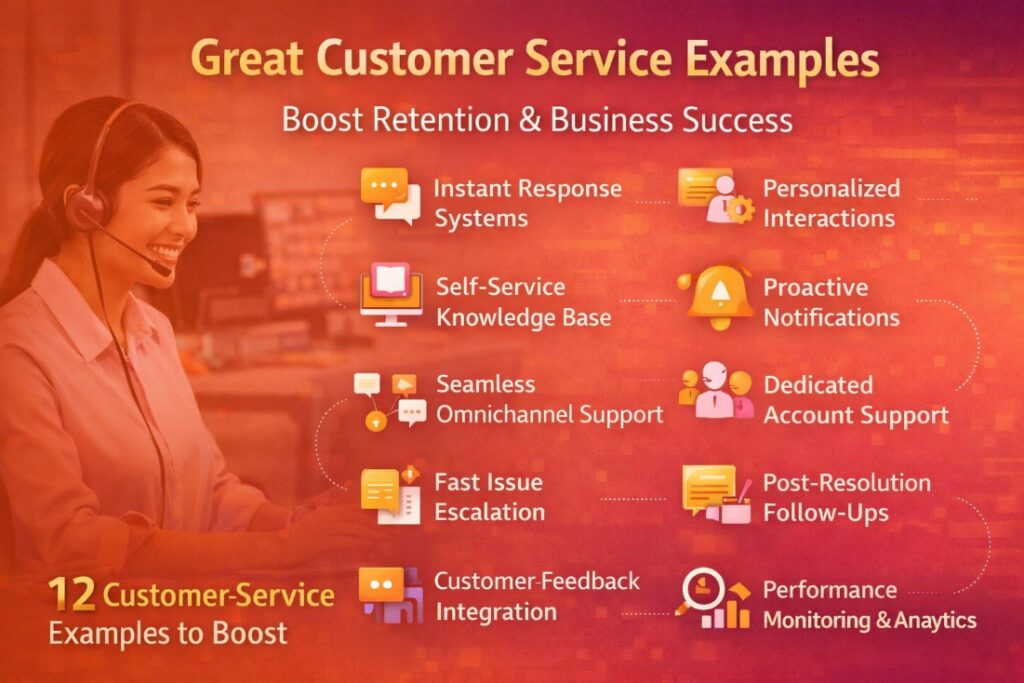
12 Customer Service Examples You Can Implement Today
1. Instant Response Systems
Use chatbots or automated acknowledgments to ensure customers receive immediate responses, even outside business hours.
2. Personalized Interactions
Leverage customer data to tailor communication and offer relevant solutions.
3. Self-Service Knowledge Base
Provide easy access to FAQs, tutorials, and guides so customers can resolve common issues independently.
4. Proactive Notifications
Keep customers informed about updates, maintenance, or potential disruptions before they impact the experience.
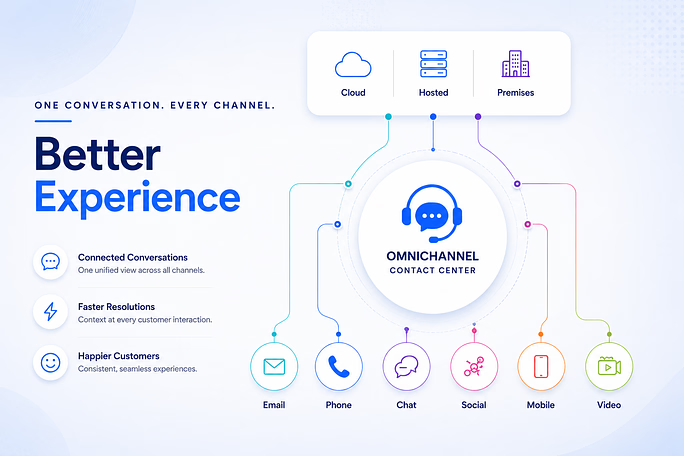
5. Seamless Omnichannel Support
Enable customers to move across channels without repeating their concerns or starting over.
6. Dedicated Account Support
Offer personalized assistance through account managers or dedicated support teams for key clients.
7. Fast Issue Escalation
Implement clear escalation paths to resolve complex issues quickly and efficiently.
8. Post-Resolution Follow-Ups
Reconnect with customers after resolving an issue to ensure satisfaction and build stronger relationships.
9. Customer Feedback Integration
Actively gather and use feedback to improve services, processes, and overall experience.
10. Continuous Training Programs
Regularly train teams to enhance both technical expertise and communication skills.
11. Performance Monitoring and Analytics
Track metrics such as response time, resolution rate, and customer satisfaction to identify improvement areas.
12. Customer-Centric Culture
Embed customer-first thinking across all departments—not just within support teams.
How to Build an Effective Customer Service Strategy
Implementing these examples requires a structured and strategic approach:
Understand Your Customers
Identify their needs, preferences, and pain points to design better service experiences.
Leverage the Right Technology
Adopt tools such as CRM systems, automation platforms, and analytics to streamline operations.
Empower Your Team
Equip support teams with the knowledge, authority, and tools they need to resolve issues efficiently.
Continuously Improve
Regularly analyze performance and refine processes to keep up with evolving customer expectations.
Final Thoughts
Exceptional customer service is not achieved through a single initiative—it’s built through consistent effort, continuous improvement, and a strong customer-first mindset.
Businesses that focus on delivering meaningful, efficient, and personalized service experiences don’t just solve problems—they create lasting relationships.
By implementing these customer service examples, organizations can transform their support function into a powerful competitive advantage.
About the Author
The Telerain Insights Team is composed of customer experience specialists, technology consultants, and content strategists focused on helping businesses deliver smarter and more efficient service solutions.
With expertise in digital transformation, customer support technologies, and process optimization, the team shares actionable insights and best practices that empower organizations to enhance customer engagement and drive sustainable growth.
Their goal is to help businesses build scalable, customer-centric strategies that align with modern expectations and evolving market demands.