Customer Relationship Management (CRM) is more than just a system it’s a strategy that helps businesses build stronger, long-term relationships with their customers.
In today’s fast-paced and customer-driven market, businesses compete not only on products or pricing but on the quality of experience they deliver. Organizations that effectively manage customer relationships are better positioned to improve satisfaction, increase loyalty, and drive sustainable growth.
Why Customer Relationship Management Matters
Customers expect personalized, seamless, and consistent interactions across every touchpoint. Without a structured approach to managing these interactions, businesses risk losing valuable opportunities.
An effective CRM approach helps organizations:
- Centralize customer information
- Improve communication and engagement
- Enhance customer satisfaction
- Increase retention and lifetime value
CRM enables businesses to move from reactive support to proactive customer engagement.
Understanding Customer Relationship Management
Customer Relationship Management is a strategic approach to managing customer data, communication, and service processes in a way that consistently meets customer needs.
It focuses on:
- Building meaningful customer interactions
- Delivering personalized experiences
- Solving issues efficiently
- Maintaining long-term relationships
While CRM platforms support this process, true CRM success depends on how well businesses use insights to improve customer experiences.
Key Components of an Effective CRM Strategy
1. Customer Data Management
Collecting and organizing customer information allows businesses to understand behavior, preferences, and history—enabling personalized interactions.
2. Continuous Customer Support
Providing timely and effective support ensures customers receive assistance whenever they need it.
3. Analytics and Insights
Analyzing customer data helps identify trends, improve decision-making, and optimize service strategies.
4. Personalized Engagement
Tailoring communication and recommendations based on customer data enhances satisfaction and trust.
Understanding the Customer Lifecycle
A strong CRM strategy supports customers throughout their entire journey:
1. Awareness
Customers discover your products or services and seek initial information.
2. Consideration
They evaluate options and require detailed insights to make decisions.
3. Conversion
Customers make a purchase and expect a smooth and efficient process.
4. Retention
Ongoing support and engagement help maintain long-term relationships.
By addressing each stage effectively, businesses can transform one-time customers into loyal advocates.
Best Practices to Strengthen Customer Relationship Management
Optimize Customer Communication
Engage customers through multiple channels such as phone, email, chat, and social platforms, based on their preferences.
Deliver Proactive Support
Anticipate customer needs and resolve potential issues before they escalate.
Leverage Self-Service Options
Provide knowledge bases, FAQs, and automated tools that allow customers to find solutions independently.
Actively Collect and Use Feedback
Regularly gather customer feedback and use it to improve services and processes.
Maintain Consistency Across Channels
Ensure customers receive a seamless experience regardless of how they interact with your business.
The Role of Technology in CRM
Modern CRM strategies are powered by advanced technologies that improve efficiency and scalability.
These include:
- Customer data platforms for centralized information
- Automation tools for faster response times
- AI-driven insights for better decision-making
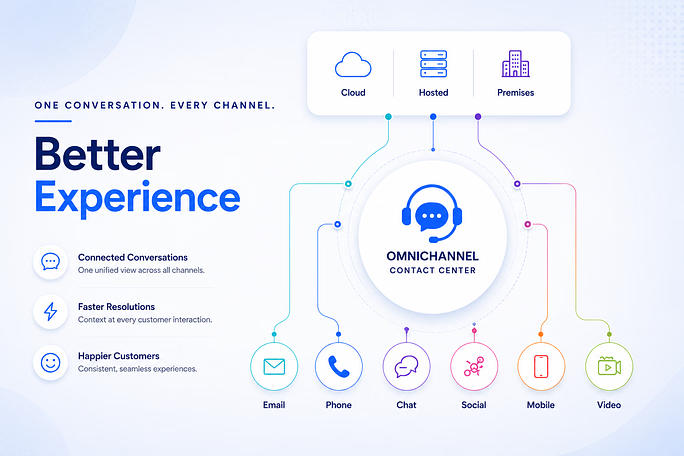
- Omnichannel systems for unified communication
Technology enhances CRM efforts by enabling businesses to deliver faster, smarter, and more personalized service.
Final Thoughts
Customer Relationship Management is not just about managing contacts—it’s about creating meaningful, long-term relationships.
Businesses that adopt a strategic, customer-first approach to CRM can improve satisfaction, strengthen loyalty, and achieve long-term success. By combining the right processes, technology, and mindset, organizations can turn every interaction into an opportunity for growth.
About the Author
The Telerain Insights Team consists of customer experience experts, technology consultants, and service strategists dedicated to helping businesses improve customer engagement and operational efficiency.
With deep expertise in communication solutions, digital transformation, and customer-centric strategies, the team provides actionable insights that enable organizations to deliver seamless and scalable customer experiences.
Their mission is to help businesses build stronger relationships by optimizing every stage of the customer journey.