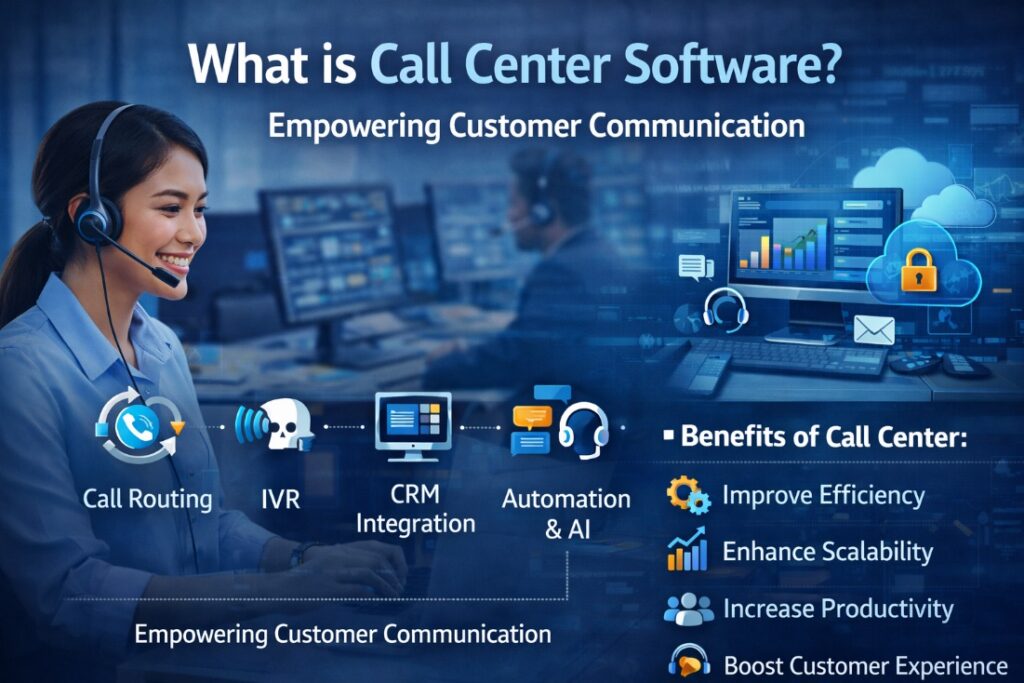
Call center software is a critical component for businesses that rely on efficient and high-quality customer communication.
As customer expectations continue to rise, organizations must deliver fast, seamless, and personalized support. Call center software enables businesses to manage high volumes of calls, streamline operations, and improve overall customer experience.
What is a Call Center?
A call center is a centralized system—either physical or virtual—designed to handle large volumes of customer interactions over the phone.
These interactions typically include:
- Customer support
- Technical assistance
- Billing inquiries
- Sales and lead generation
Modern call centers are no longer limited to physical locations. With cloud-based technology, businesses can now operate virtual call centers with remote teams, improving flexibility and service availability.
What is Call Center Software?
Call center software is a solution that helps businesses manage inbound and outbound customer calls efficiently.
It acts as a central platform that:
- Routes calls to the right agents
- Provides real-time customer data
- Tracks performance and interactions
- Automates repetitive tasks
Today’s advanced solutions also incorporate AI and automation to enhance productivity, reduce manual work, and deliver more personalized customer experiences.
How Call Center Software Works
Call center software operates through a combination of intelligent systems and automation:
1. Call Routing
Incoming calls are automatically directed to the most suitable agent based on availability, skills, or priority.
2. Interactive Voice Response (IVR)
Customers interact with automated menus to reach the right department or resolve simple queries.
3. CRM Integration
Customer data is displayed in real time, giving agents full context before answering the call.
4. Call Queuing
Calls are placed in organized queues to ensure structured handling during high volumes.
5. Automation and AI
Tasks such as call summaries, follow-ups, and responses are automated to improve efficiency.
6. Analytics and Monitoring
Supervisors can track performance metrics like call volume, response time, and customer satisfaction.
Types of Call Centers
Inbound Call Centers
Handle incoming customer calls related to support, inquiries, and issue resolution.
Outbound Call Centers
Focus on outgoing calls for sales, follow-ups, surveys, and customer engagement.
Blended Call Centers
Manage both inbound and outbound calls to maximize productivity and efficiency.
Automated Call Centers
Use automation and AI tools to handle routine interactions and improve scalability.
Call Center vs Contact Center
While often used interchangeably, there is a difference:
- Call Center: Focuses primarily on voice-based communication
- Contact Center: Supports multiple channels such as email, chat, and social media
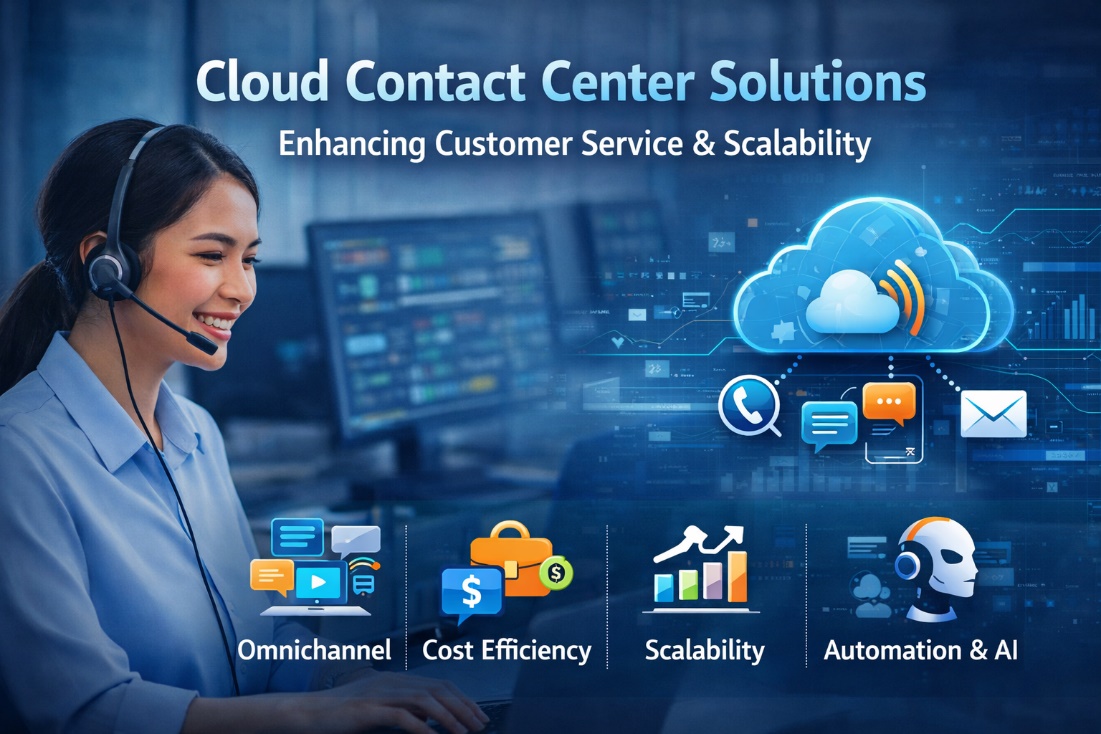
Modern businesses are increasingly adopting contact center capabilities to deliver omnichannel experiences.
Key Features of Call Center Software
Intelligent Call Routing
Ensures customers are connected to the right agent quickly.
Omnichannel Support
Allows integration with multiple communication channels.
Real-Time Analytics
Provides insights into performance and customer behavior.
Automation Tools
Reduces manual work through automated workflows and responses.
AI-Powered Insights
Enhances decision-making with data-driven recommendations.
Call Recording and Monitoring
Improves quality control and compliance.
Benefits of Call Center Software
Faster Issue Resolution
Customers are connected quickly to the right support, reducing wait times.
Improved Agent Productivity
Automation reduces repetitive tasks, allowing agents to focus on complex issues.
Scalability
Easily adapt to increasing call volumes without infrastructure challenges.
Enhanced Customer Experience
Personalized and efficient interactions improve satisfaction and loyalty.
Centralized Data Management
All customer interactions are stored and accessible in one place.
How to Choose the Right Call Center Software
When selecting a solution, consider:
- Ease of integration with existing systems
- Scalability and flexibility
- Security and compliance features
- User-friendly interface
- Availability of automation and AI capabilities
Choosing the right solution ensures long-term efficiency and better service delivery.
Final Thoughts
Call center software has evolved into a powerful platform that goes beyond managing calls—it enables businesses to deliver smarter, faster, and more personalized customer experiences.
By leveraging the right technology, organizations can improve operational efficiency, empower their teams, and build stronger customer relationships.
About the Author
The Telerain Insights Team is composed of customer experience specialists, technology experts, and digital transformation consultants focused on helping businesses optimize communication and service operations.
With expertise in call center solutions, cloud platforms, and AI-driven technologies, the team delivers actionable insights to help organizations enhance efficiency and create seamless customer experiences.